
Sex Offender Checks in Wise County
The Virginia Sex Offender and Crimes Against Minors Registry is the primary channel for a Wise County check. It is maintained by the Virginia State Police, not by a private search vendor. Searchers may look by a person's name or use location fields such as county, city, ZIP code, or street address. That range matters in the coalfield region, where nearby communities and state borders can make a narrow city-only search incomplete.
Start with the facts already known. Exact spelling and an alias can separate similar names. A county filter helps survey Wise County, while an address and radius focus on a smaller area. Search results reflect the registry's latest published verification data. They are not a complete criminal history, and they do not describe every fact from the court case that led to registration.
The registry and the Central Criminal Records Exchange are separate VSP systems. A registry search addresses public registration status. An SP-167 request addresses consent-based Virginia conviction information. Neither product replaces the police narrative or the clerk's full case file, so match the channel to the question before relying on a result.
Wise County Registry Search Fields
The official registry offers both person and place searches. Use only the fields supported by reliable facts. Guessing at a date, spelling, or street can exclude the right result. If a Wise County result seems absent, clear the form and broaden the geography before drawing a conclusion.
| Field Label | Type | Required | Use |
|---|---|---|---|
| Last / First Name | Text | Conditional / optional | Search a known name; check spelling and aliases |
| County | Dropdown | Optional | Select Wise for countywide results |
| City / ZIP | Text or dropdown | Optional | Narrow the geographic area |
| Street Address | Text | Conditional | Set the center point for a proximity search |
| Radius | Dropdown | Conditional | Choose from the live options shown by the portal |
| Search / Reset | Buttons | Not applicable | Run or clear the query |
Radius choices can change, so the live portal controls. A map marker is not a legal boundary survey and does not imply that every resident at a displayed address is registered.
How to Search the Virginia Registry
Follow the state portal's conditions of use before searching Wise County. A name search and a location search answer different questions, so run both when personal and neighborhood awareness are relevant. The source screen itself should remain the final reference.
- Open the Virginia registry and review the posted terms and security prompts.
- Enter a verified name, or select Wise County and add a city, ZIP code, or address when useful.
- Compare the result list using aliases, physical details, status, and location without relying on a name alone.
- Open the current profile and read the offense, jurisdiction, registration status, and verification details in context.
The blank search form, rather than any private person's profile, is the proper place to begin. When exact Wise County registration logistics are needed, contact the Sheriff's administrative office instead of inferring them from the public display.
Wise County and National Registry Searches
The Dru Sjodin National Sex Offender Public Website adds a cross-jurisdiction search layer. Its reach is useful near Kentucky and Tennessee or when a person has lived or been convicted outside Virginia. The source's neutral search interface is shown below.
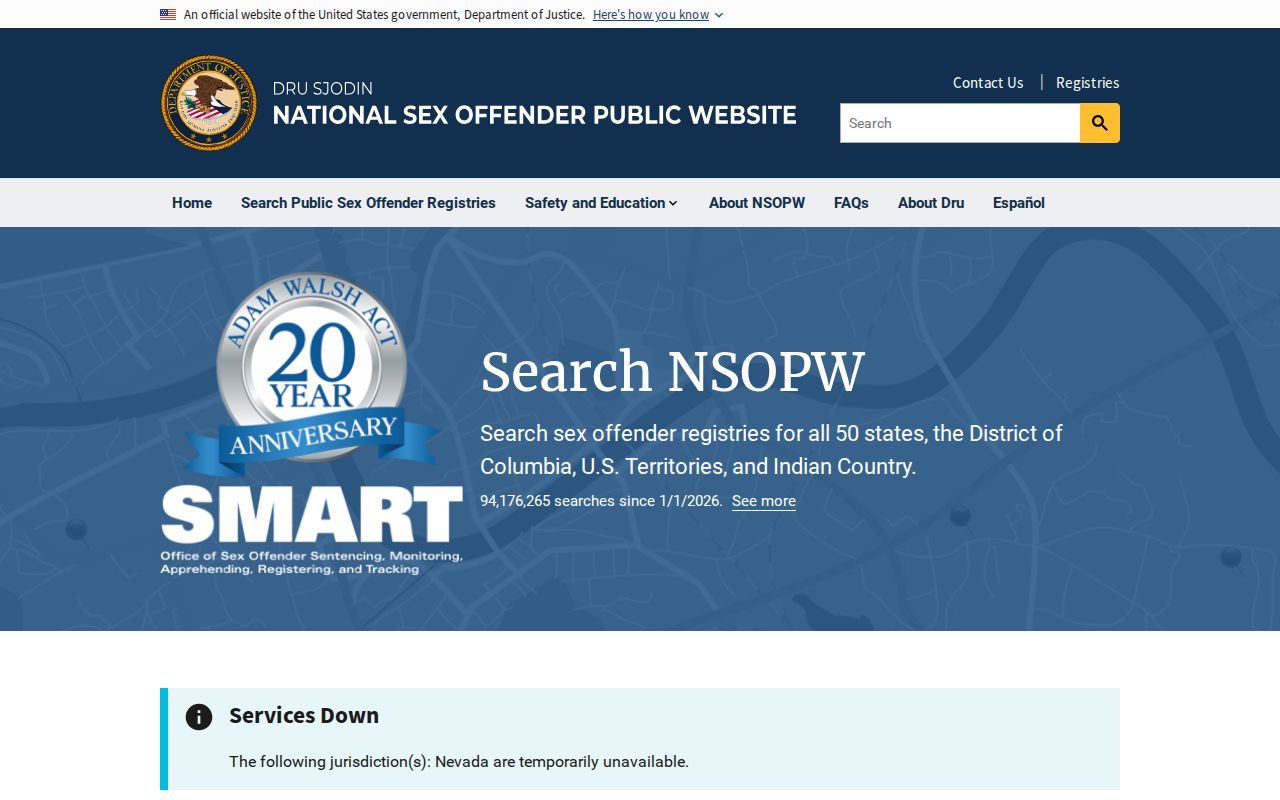
NSOPW combines searches from participating jurisdictions, while VSP remains the official source for a Virginia registry record. A national result should lead back to the originating jurisdiction's current profile. Differences may reflect update timing, search terms, or the scope of each participating system, so one empty screen should not be treated as proof that no public registration exists.
Use VSP first for a Virginia address. Use NSOPW when the relevant geography crosses a state line. For an apparent local compliance problem, report the concern to law enforcement rather than trying to resolve it in person.
Inside a Registry Profile
A public registry profile identifies the registrant and supplies the statutory facts Virginia is allowed to publish. Read each field as a record entry, not as a risk score. The offense description, conviction date, and jurisdiction describe the legal basis for registration. They do not reproduce the full police report, testimony, or court file.
| Identity | Name, aliases, photograph, and physical descriptors such as sex, race, height, weight, hair, and eyes |
|---|---|
| Birth Information | Date-of-birth information displayed as Virginia law permits |
| Registered Location | Registered address and other statutorily public location fields |
| Offense | Qualifying offense, conviction jurisdiction, and date |
| Marks | Scars, marks, and tattoos when published |
| Other Public Fields | Vehicle, school, or related details when the statute makes them public |
| Status | Tier and the current compliance or registration wording shown by VSP |
Profiles change when addresses and other data are verified. Save the date of a search if it supports a safety plan, then recheck the official profile rather than circulating an old capture.
Reading Wise County Registry Profiles
Several cautions prevent false conclusions. A shared street address does not label every person there. A map point is not proof of a property line. Likewise, the registry tier is a legal category, not a forecast of future conduct. Virginia does not publish an official public "danger score," so one should never be invented from an offense label or tier.
The Virginia Registry Act is the source for which fields and duties apply. Its official presentation helps distinguish the governing law from summaries that flatten Virginia's rules into generic federal shorthand.
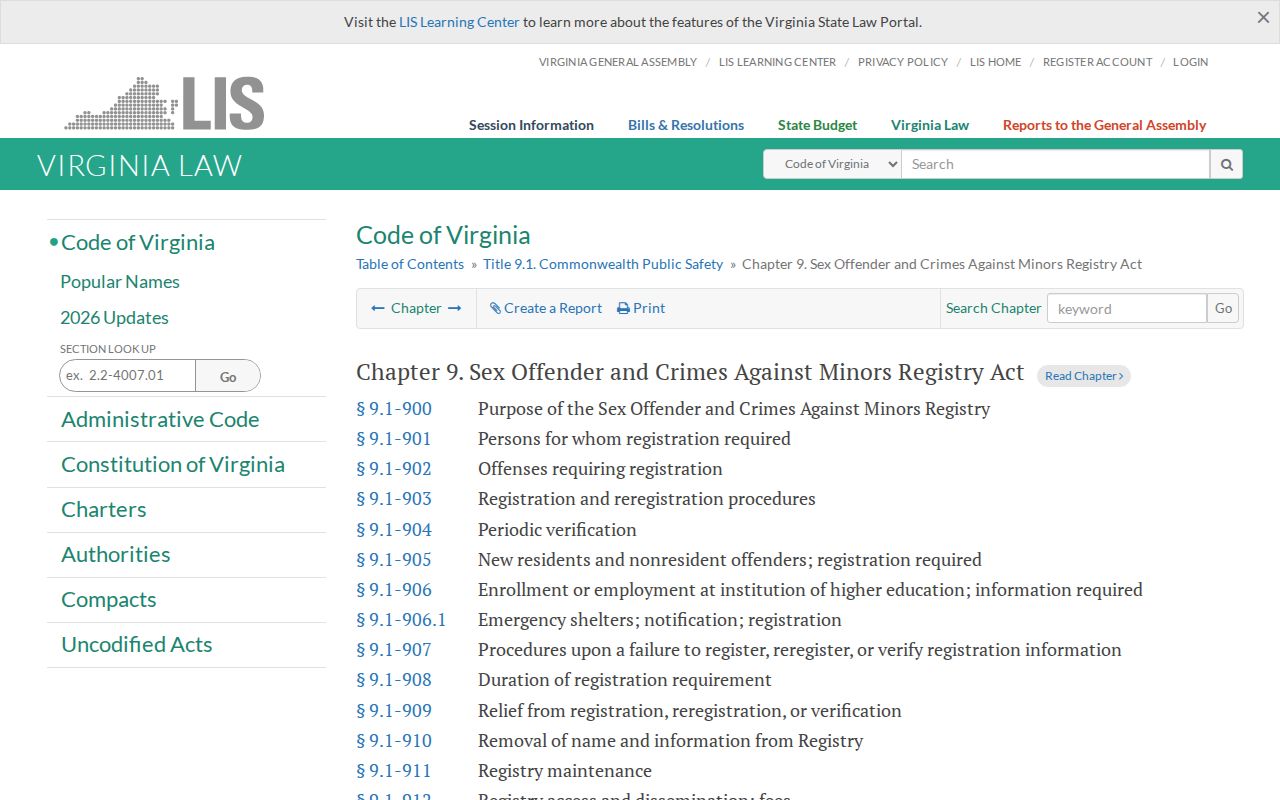
The statute-based view explains why two Wise County profiles can have different reporting duties or public details. If a term is unclear, use the VSP program contact rather than guessing from another state's system.
Virginia Registration Levels and Requirements
Virginia classifies registrants as Tier I, Tier II, or Tier III. Duration and verification duties depend on the qualifying offense, record, and current statute. The research does not support assigning one universal verification schedule to every member of a tier, so Wise County residents should confirm the live profile and the Registry Act instead of relying on a simplified chart.
| Tier | Duration or Removal Rule | Public Interpretation |
|---|---|---|
| Tier I | A qualifying single-offense registrant may petition no earlier than 15 years from the later statutory starting point | Fifteen years permits a petition in some cases; it does not grant automatic removal |
| Tier II | Duration and duties follow the qualifying offense and current Virginia law | Do not substitute a generic federal duration |
| Tier III | Tier III is excluded from the petition route described in §9.1-910 | The current VSP profile and statute control |
Multiple qualifying offenses and listed convictions can also bar the petition route. Registration duties remain in force unless a valid order or another legal event changes them.
Wise County Registration and Compliance
The Wise County Sheriff's Office is the local starting point for registration logistics and an apparent failure to comply. Its administrative office is at 5605 Patriot Drive, Wise, Virginia 24293. Call 276-328-3566 during the published Monday through Friday administrative hours of 8:00 a.m. to 4:30 p.m. The research found no official local fee page, appointment schedule, email-alert service, or separate registration-counter instructions.
Wise County Sheriff's Office
5605 Patriot Drive
Wise, VA 24293
276-328-3566
Administrative hours: Monday-Friday, 8:00 a.m.-4:30 p.m.
Call first to confirm where and when a specific registration task is handled. Report suspected noncompliance with the facts observed, then let WCSO or VSP investigate. Do not confront the person or household.
Note: The public registry shows published status, while law enforcement holds the records needed to investigate a claimed compliance failure.
Wise County Registry Tier I Petitions
Registry removal is not the same process as criminal-record expungement or sealing. Under Virginia Code §9.1-910, some people with a single non-Tier III qualifying offense may petition after the statutory period. A court reviews the complete criminal history and the registration and verification history, then holds a hearing. Passing the earliest date alone does not guarantee relief.
The official removal-petition provision provides the governing framework for a Wise County case.
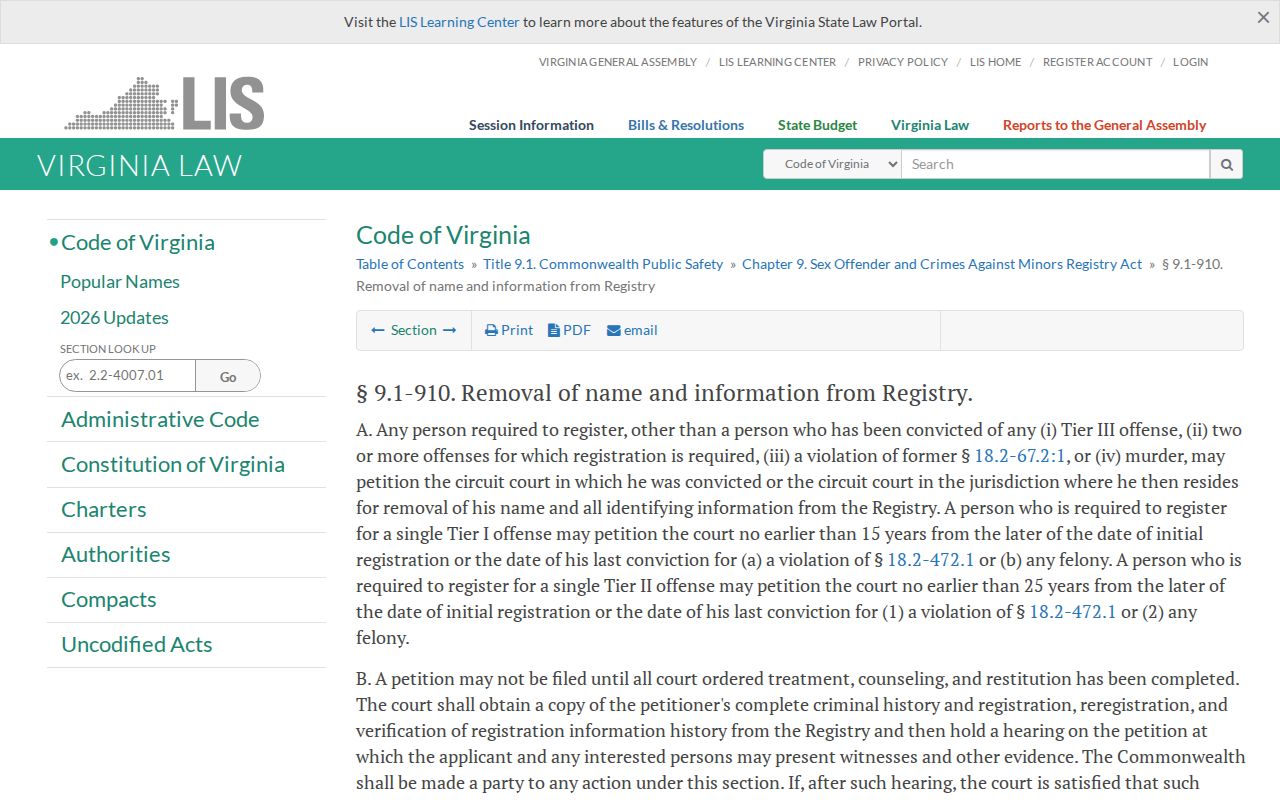
Tier III status, multiple qualifying offenses, and enumerated convictions may exclude the petition. Death, pardon, reversal, or a qualifying expungement order can involve separate rules for removing public registry data. Anyone reviewing their own status should distinguish those routes and obtain the exact court and registry record before acting.
Community Notification and Lawful Use
Registry information supports personal, family, and community awareness. A sound response is practical: verify the current VSP profile, use NSOPW when another state matters, set household safety plans, and pass a specific concern to the Wise County Sheriff's Office or the VSP registry program. The program may be reached at 804-674-2825 or sor@vsp.virginia.gov for state registry questions.
Do not publish a stale profile as if it were current. Do not infer facts about family members, neighbors, or everyone at an address. The full court file, when public, is a separate record held by the clerk. The registry reports the facts selected by Virginia law for public notice.
Use registry data lawfully: The Virginia registry warns that using its information to harass, intimidate, or threaten a registrant or household is a crime under the Virginia Registry Act. Report concerns to law enforcement and never confront a listed person.
For a wider look at how local arrest, court, and state records differ, use the Wise County criminal history overview. That separation helps keep a registry finding in its proper legal context.